Why the iPhone 18 Roadmap Matters for Your Indian SMB Today

APX Teck
Why the iPhone 18 Roadmap Matters for Your Indian SMB Today
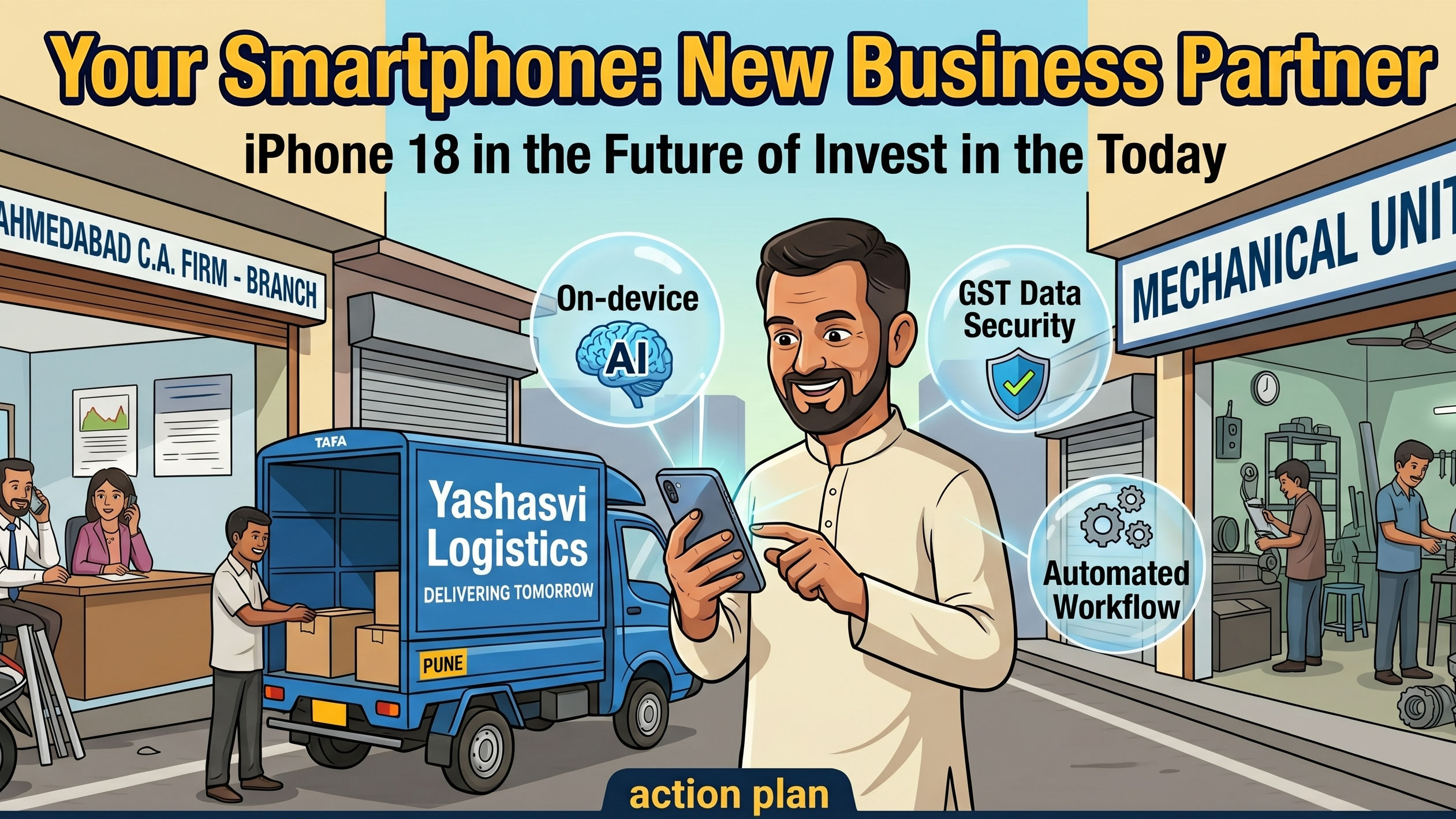
Walk into any busy CA firm in Ahmedabad during tax season. You will see partners juggling three different phones, frantically replying to clients on WhatsApp while trying to approve tax drafts. It is chaotic, fast-paced, and almost entirely run on mobile screens.
Most Indian business owners buy phones only when their current device completely dies. They run to the nearest local electronics market, grab whatever mid-range model is available, and get back to work. But with the global supply chain already buzzing about the development of the iPhone 18, it is time to change how you view these pocket-sized business tools.
Think of your office smartphone like a delivery tempo for a manufacturing unit in Pune. You do not just buy a commercial vehicle to handle today's local traffic. You buy it keeping in mind the highway expansions, fuel price changes, and state transport rules coming over the next three years.
"Failing to plan is planning to fail. Treat your technology as an investment in tomorrow, not just an emergency expense for today."
The Trap of the Yearly Upgrade Cycle
For years, smartphone upgrades felt like minor cosmetic updates. A slightly better camera here, a new gold finish there, and maybe a marginally faster processor that you barely noticed during daily use. Many small business owners understandably stopped paying attention to new launches.
Why should you care about a phone model that is still a couple of years away from hitting the shelves?
Because the architectural roadmap leading up to the iPhone 18 represents a fundamental shift in how small businesses will handle daily operations and customer service. We are rapidly moving away from phones that simply run external apps. We are entering the era of devices designed to act as active business partners, doing the heavy lifting of data sorting and communication directly on your desk.
What the iPhone 18 Whispers Tell Us
Leaks from the international chip manufacturing supply chain indicate that by the time the iPhone 18 arrives, Apple will have fully transitioned to a highly advanced two-nanometer silicon process.
In plain terms, this means massive processing power combined with battery efficiency that could easily last two full days of heavy business calling. More importantly, this upcoming hardware architecture is being built from the ground up to run complex artificial intelligence models directly on the device itself. This means your phone will not need a constant, high-speed internet connection to process smart tasks.
Imagine your sales representatives traveling through rural parts of Madhya Pradesh or Bihar where network connectivity is notoriously spotty. With the on-device intelligence expected in the iPhone 18 era, they can still analyze sales trends and draft personalized regional client pitches without waiting for a cloud server to connect.
"Innovation distinguishes between a leader and a follower." – Steve Jobs
The Local Business Impact of On-Device AI
Let us look at another practical scenario. A boutique clothing exporter in Surat deals with international clients across different time zones daily. Right now, translating foreign emails, managing shipping logs, and cataloging fabric designs requires switching between four different paid apps and services.
By the time the iPhone 18 series launches, deep system-level integration will allow your phone to automate these multi-step workflows with simple voice prompts. You could tell your phone to find all dispatch invoices from last week, convert the figures to euros, and WhatsApp them directly to your logistics partner.
This is not science fiction or futuristic dreaming. It is the exact direction of mobile operating systems, and the hardware of the next two years is being designed specifically to support these intensive tasks without overheating your device.
Protecting Your Customer Data
Think about how much sensitive business data currently sits on your employees' personal smartphones. From customer mobile numbers to raw GST registration details shared over quick chats, a single data leak can ruin a growing brand's reputation.
Future devices are placing an immense focus on hardware-level security enclaves. This technology keeps your commercial data completely isolated from personal apps and unauthorized downloads, giving small business owners peace of mind.
If your sales team is collecting customer feedback or processing digital payments on the go, having this level of hardware security is no longer a luxury. It is a basic requirement to protect your enterprise from rising cyber threats and local phishing scams.
How to Budget Your Tech Spend Right Now
If you are planning to upgrade your team's office devices this year, do not just look at the cheapest available option to get by. Buying outdated hardware today means you will be completely locked out of these productivity tools when they become standard business practice.
Instead of buying five budget phones that will lag and run out of storage space in twelve months, consider a structured upgrade cycle. It is far better to invest in high-quality hardware that supports current smart features, preparing your business workflow for the capabilities of tomorrow.
Treat your mobile hardware as a serious capital expense rather than an emergency purchase made when a screen cracks. By planning your upgrade cycle around major technological shifts rather than yearly marketing hypes, you save money and keep your team highly competitive.
"The secret of change is to focus all of your energy, not on fighting the old, but on building the new." – Socrates
Your Action Plan for This Week
Audit Your Current Devices: Take an hour this week to list every smartphone your sales and operations teams are using. Note down their purchase date, remaining storage space, and whether they can support basic digital assistant features so you can identify your communication bottlenecks.
Stop the Emergency Buying Cycle: Establish a clear policy for your business that no mobile phone is purchased on impulse. Set aside a dedicated yearly budget for technology upgrades, aiming to replace devices every three years rather than waiting for them to break down completely.
Test Simple Automation Tools: Use the free assistant systems already built into your current phones, like built-in shortcuts or voice routines. Getting your team used to voice-activated workflows now will make the transition to future smart devices incredibly smooth for everyone.
Article Comments
You must be signed in to post comments.
Sign In to Join the Discussion →No comments approved yet. Be the first to share your thoughts!
About the Author
APX Teck
Technology Consultant
Professional engineers crafting clean code architectures and visual portfolios for SMBs.