


Samsung Flex Titanium: The Technology That Could Transform the Future of Foldable Smartphones

Amol Khodre
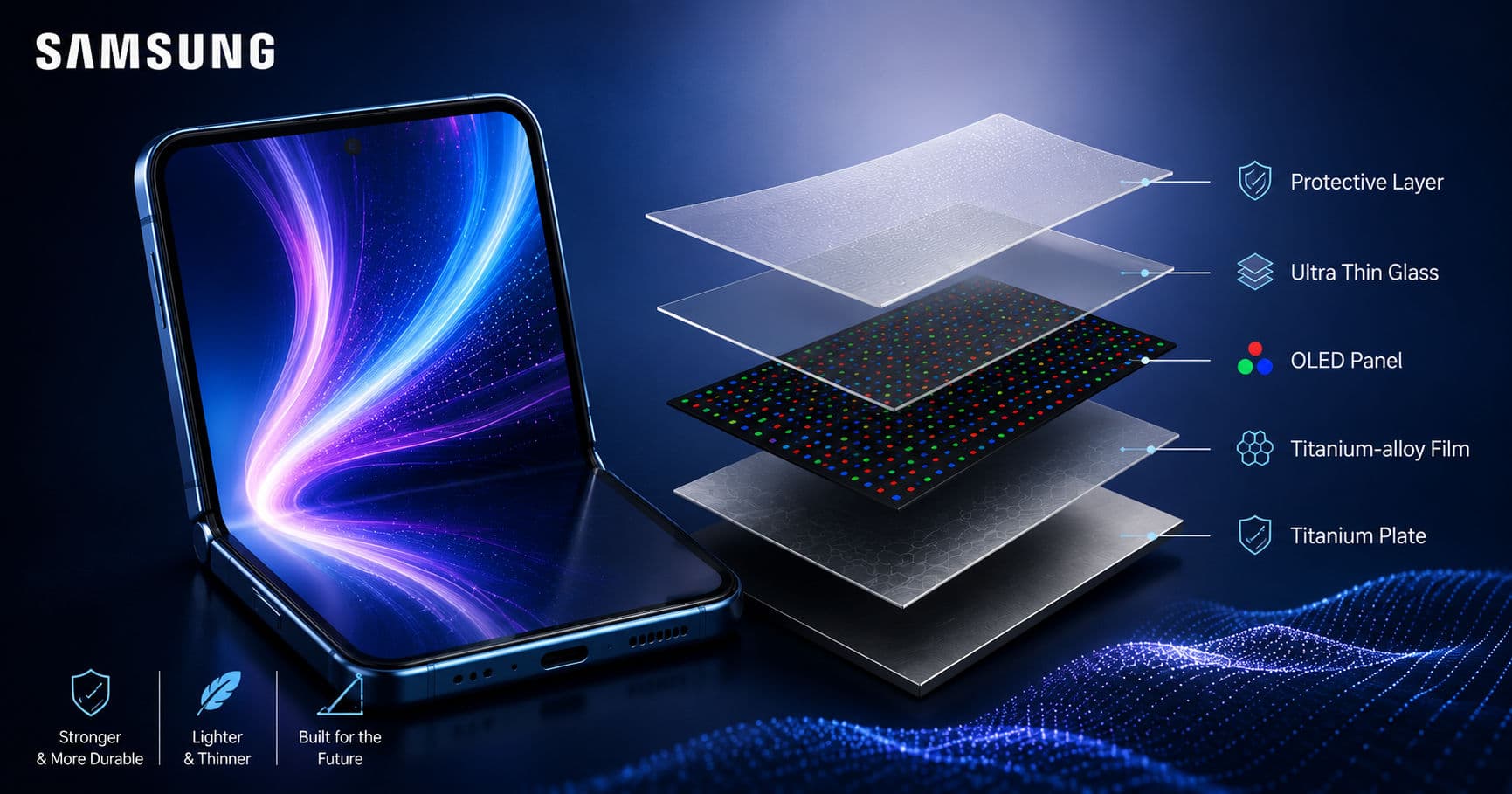
Samsung Flex Titanium: The Technology That Could Transform the Future of Foldable Smartphones
Innovation has always been at the heart of the smartphone industry. Every year, manufacturers compete to deliver faster processors, better cameras, brighter displays, and smarter software experiences. Yet one category continues to represent the next frontier of mobile technology—foldable smartphones.
Over the past few years, foldable devices have evolved from experimental concepts into premium flagship products. However, challenges such as display durability, visible creases, device thickness, and long-term reliability have remained key concerns for both consumers and manufacturers.
Samsung's latest announcement introduces Flex Titanium, a new display technology designed to address many of these challenges. While the technology itself is an engineering advancement, its significance extends far beyond hardware. It reflects the direction in which the entire smartphone industry is moving—toward stronger, lighter, and more reliable foldable devices.
Why Foldable Technology Matters
The smartphone market has matured significantly over the last decade. Traditional slab smartphones have reached a point where yearly hardware improvements are becoming increasingly incremental.
Foldable smartphones offer something different.
They combine:
- Large tablet-like displays
- Compact portability
- Enhanced multitasking
- Improved productivity
- Better entertainment experiences
For professionals, content creators, and business users, foldable devices provide greater flexibility without carrying multiple devices.
This growing demand has encouraged manufacturers to invest heavily in foldable display research.
"The future of smartphones isn't just about faster chips—it's about creating entirely new user experiences."
Understanding Samsung's Flex Titanium
Samsung recently introduced Flex Titanium, an advanced display technology developed specifically for foldable smartphones.
Unlike traditional foldable structures, Flex Titanium incorporates titanium-based structural components into the display assembly to improve overall strength while maintaining a lightweight design.
According to Samsung, this innovation helps create a display that is:
- Stronger
- Thinner
- More durable
- Better protected against repeated folding
- Designed for long-term reliability
Although users may not immediately notice the engineering hidden beneath the display, these improvements directly contribute to the everyday experience of using a foldable smartphone.
Why Titanium?
Titanium has long been recognized for its impressive strength-to-weight ratio.
It is already used across industries such as:
- Aerospace engineering
- Medical equipment
- Automotive manufacturing
- Premium consumer electronics
Now, Samsung is bringing similar engineering principles into foldable display technology.
The advantages include:
Improved Structural Strength
Titanium provides excellent mechanical stability while keeping overall weight low.
Reduced Device Thickness
By optimizing the display structure, manufacturers can design slimmer foldable smartphones without sacrificing durability.
Enhanced Durability
Foldable displays undergo thousands of opening and closing cycles during their lifetime.
A stronger internal structure helps improve long-term reliability.
Premium User Experience
Consumers increasingly expect premium smartphones to feel both lightweight and durable.
Titanium supports both objectives simultaneously.
Beyond Hardware: A Better User Experience
Most smartphone users don't purchase technology simply because it contains advanced materials.
They care about real-world benefits.
Flex Titanium has the potential to improve several aspects of everyday smartphone usage, including:
- Better portability
- More comfortable handling
- Improved durability during daily use
- Increased confidence in foldable devices
- Longer product lifespan
Ultimately, engineering improvements matter because they create better experiences for users—not just better specifications on paper.
The Bigger Industry Picture
Samsung's latest innovation highlights a broader trend within the consumer electronics industry.
Manufacturers are increasingly investing in:
- Advanced materials
- AI-powered software
- Smarter displays
- Sustainable engineering
- Lightweight components
- Premium industrial design
Instead of focusing only on processing power, companies are reimagining how devices are built from the inside out.
This shift represents the next stage of smartphone innovation.
Why This Matters for Businesses
Although Flex Titanium is designed for smartphones, the lessons extend far beyond consumer electronics.
Successful technology companies continuously invest in research, materials science, and engineering improvements that may not always be visible to customers but significantly improve product quality.
Businesses across every industry can learn from this approach:
- Continuous innovation creates long-term competitive advantages.
- Investing in quality builds customer trust.
- Small engineering improvements often lead to major user experience gains.
- Premium products are built through attention to detail—not just new features.
Continue Reading on APXTECK
Interested in more technology insights?
Explore:
👉 OnePlus' Global Strategy Shift: What Oppo's Business Restructuring Could Mean for Smartphone Users
👉 Microsoft's Record 570 Security Fixes: What Every Business Should Learn About Modern Cybersecurity
👉 What Developers Can Learn from Recent Grok AI Repository Upload Reports
👉 Explore More Technology Insights
https://www.apxteck.com/insights-news
The Future of Foldable Smartphones
Foldable smartphones have moved far beyond being experimental devices. Today, they represent one of the fastest-growing premium smartphone categories, attracting professionals, content creators, business users, and technology enthusiasts alike.
The introduction of technologies such as Samsung Flex Titanium suggests that the next generation of foldable devices will focus less on simply folding and more on delivering long-term durability, premium design, and a seamless user experience.
Future foldable smartphones are expected to feature:
- Stronger display structures
- Reduced screen creasing
- Lighter device construction
- Longer durability
- Improved battery efficiency
- AI-powered software experiences
- Better multitasking capabilities
These improvements will help foldable devices become practical daily drivers rather than niche premium products.
"True innovation isn't about adding more features—it's about solving real user problems through better engineering."
Why Material Innovation Matters
Most smartphone discussions revolve around processors, cameras, or AI features. However, material engineering often plays an equally important role.
Materials such as titanium provide several advantages:
- Higher strength-to-weight ratio
- Better structural stability
- Improved durability
- Lightweight construction
- Premium finish
By incorporating advanced materials into foldable displays, manufacturers can improve both product reliability and customer confidence.
For consumers, this means devices that feel more premium while lasting longer under everyday usage.
AI and Foldable Devices: The Next Evolution
Modern smartphones are becoming more intelligent every year.
Artificial Intelligence is now helping users:
- Edit photos instantly
- Translate conversations in real time
- Summarize documents
- Improve battery performance
- Personalize user experiences
- Enhance productivity
As foldable hardware becomes more capable, AI software will become even more important.
The combination of flexible displays and AI-powered interfaces could redefine how users interact with smartphones, enabling more efficient multitasking, smarter productivity, and immersive digital experiences.
Industry Impact
Samsung's announcement may influence the entire smartphone ecosystem.
Other manufacturers are also investing heavily in foldable technologies, creating healthy competition that ultimately benefits consumers.
As innovation accelerates, we can expect improvements in:
- Display durability
- Device reliability
- Premium materials
- Sustainable manufacturing
- Repairability
- User experience
Competition drives innovation, and innovations like Flex Titanium encourage the entire industry to push technological boundaries.
What Businesses Can Learn
This announcement isn't only important for smartphone users.
Businesses can learn valuable lessons from Samsung's approach.
Successful organizations continue investing in innovation even after becoming market leaders.
Instead of focusing only on short-term sales, they invest in:
- Research and development
- Product quality
- Customer experience
- Long-term reliability
- Engineering excellence
These investments create stronger brands and higher customer trust.
"Innovation is rarely the result of one breakthrough—it's the outcome of continuous improvement over time."
Continue Reading on APXTECK
If you're interested in emerging technologies and digital innovation, explore more expert insights from APXTECK.
👉 OnePlus' Global Strategy Shift: What Oppo's Business Restructuring Could Mean for Smartphone Users
https://www.apxteck.com/insights-news
👉 Microsoft's Record 570 Security Fixes: What Every Business and IT Team Should Learn About Modern Cybersecurity
https://www.apxteck.com/insights-news
👉 What Developers Can Learn from Recent Grok AI Repository Upload Reports
https://www.apxteck.com/insights-news
👉 Explore More Technology Articles
https://www.apxteck.com/insights-news
Official Resources
For readers interested in learning more about Samsung's latest display technology, refer to these trusted resources:
-
Samsung Global Newsroom
https://news.samsung.com/global -
Samsung Display
https://www.samsungdisplay.com -
Samsung Mobile
https://www.samsung.com -
Android Developers
https://developer.android.com
These official sources provide detailed technical information and future product announcements.
Key Takeaways
✔ Samsung Flex Titanium introduces advanced material engineering for foldable displays.
✔ Titanium technology helps improve durability while maintaining a lightweight design.
✔ Foldable smartphones continue moving toward mainstream adoption.
✔ Material innovation is becoming just as important as processor performance and camera technology.
✔ AI and foldable hardware together are expected to shape the next generation of mobile experiences.
✔ Continuous innovation remains the foundation of long-term success in the technology industry.
Frequently Asked Questions
What is Samsung Flex Titanium?
Samsung Flex Titanium is an advanced foldable display technology that uses titanium-based structural components to improve the strength, durability, and slimness of foldable smartphone displays.
Why is titanium important in smartphones?
Titanium offers an excellent balance between strength and weight, making devices more durable while keeping them lightweight and comfortable to use.
Will Flex Titanium make foldable phones more durable?
Samsung's goal is to improve structural strength and long-term reliability, helping foldable devices better withstand repeated folding over time.
Does this technology affect everyday users?
Yes. Improvements in durability, thinner designs, and stronger display structures contribute directly to a better user experience and increased confidence in foldable devices.
Final Thoughts
Samsung's introduction of Flex Titanium is more than a hardware announcement—it reflects the ongoing evolution of smartphone engineering. As foldable devices continue to mature, innovations in materials, design, and software will play an increasingly important role in shaping the future of mobile technology.
Rather than focusing solely on specifications, manufacturers are now investing in engineering solutions that enhance durability, improve usability, and deliver a premium experience over the lifetime of the device.
For consumers, this means smarter, stronger, and more reliable smartphones. For the technology industry, it signals another important step toward making foldable devices a mainstream choice.
"The future of smartphones won't be defined by bigger numbers on a specification sheet—it will be defined by better engineering, meaningful innovation, and experiences that genuinely improve everyday life."
Ready to Build Future-Ready Digital Solutions?
At APXTECK, we help businesses transform ideas into scalable digital products through modern technologies, user-focused design, and secure software development.
Our expertise includes:
- Custom Web Application Development
- Enterprise Software Solutions
- AI-Powered Applications
- UI/UX Design
- Cloud-Based Platforms
- Digital Transformation Services
Whether you're building the next innovative application or modernizing existing systems, our team is ready to help.
👉 Explore Our Services
https://www.apxteck.com/
👉 Read More Insights
https://www.apxteck.com/insights-news
👉 Contact Our Experts
https://www.apxteck.com/contact
Article Comments
You must be signed in to post comments.
Sign In to Join the Discussion →No comments approved yet. Be the first to share your thoughts!
About the Author

Amol Khodre
Director & Co-Founder at APXTECK SOLUTIONS PRIVATE LIMITED
Director & Co-Founder at APXTECK SOLUTIONS PVT. LTD. He specializes in driving enterprise digital transformation and building scalable web architectures. With a strong foundation in full-stack development and modern UI/UX design, he is passionate about crafting intuitive and robust digital solutions for businesses.
Related Insights

Why Whale Vomit Is Worth Millions: The Truth About Ambergris and the Fragrance Industry

OnePlus' Global Strategy Shift: What Oppo's Business Restructuring Could Mean for Smartphone Users

NASA's Webb Telescope Finds Hidden Planet in Beta Pictoris System

The 3 Careers That Will Pay the Most in 2026–2030 — AI, Quantum, and the End of Engineering Silos

GPT-5.6 vs Grok 4.5 vs Claude Fable 5 — I Built the Same GTA Game With All Three. Here Is the Honest Result.

OmniRoute: The Free Open-Source Tool That Connects Claude Code, Cursor, and Codex to 1.6 Billion Free Tokens Every Month

How to Grow Your Business: The 4 Powerful Growth Strategies Explained